

Sony Alpha 9 Vs 7 Iii
Disclosure: As an Amazon Acquaintance I earn from qualifying purchases made through links on this site. I may besides earn from links to other online retailers at no extra cost to you.
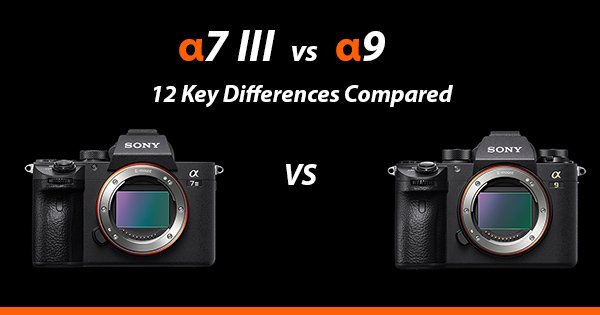
The Sony a7 Three (ILCE-7M3) and the Sony a9 (ILCE-9) share many features in common, in fact the a7 Iii was even called a "baby a9" by early reviewers. Simply is it really a threat to Sony's flagship a9 camera that costs around $2500 more the a7 Iii?
In this comparison article I'm going to exist taking a much closer look at 12 key differences between the Sony a7III and the a9, both of which I'm fortunate to own myself.
Related comparing articles: a7 III vs a7R III | a7 II vs a7 III
1. Image Sensor and Processor
Although both the a7 3 and a9 share a similar 24.2 megapixel dorsum-illuminated Exmor R CMOS sensor, the design of the a9 sensor is in a different league to the a7 III.
The flagship Sony a9 uses a game-changing stacked back-illuminated Exmor RS sensor with integral retentiveness, this allows the a9 to analyze a subject field for correct focus and exposure at 60X a second, whereas the a7 Iii only analyzes the subject at 20X a second.
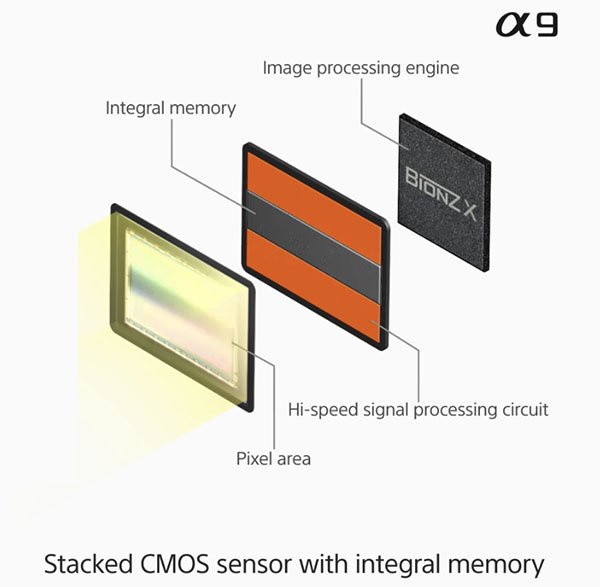
This stacked sensor design helps the a9 to achieve faster continuous shooting speeds of 20fps vs 10fps, a faster shutter speed of one/32000 vs 1/8000, also as minimizing the rolling shutter effect and banding from artificial lighting.
Here's a video from Sony to demonstrate the amazing capabilities of the a9'due south image sensor:
Both cameras include in body image stabilization that works across five-axis and is rated at 5-stops.
2. Silent / Electronic Shutter
Both the a9 and the a7 III feature a silent electronic shutter, nonetheless the electronic shutter in the a9 tin can shoot up to 1/32000 second, this compares with only 1/8000 second with the a7 Mark Iii.
You might recall you will never demand such a loftier shutter speed, but if yous are shooting in very brilliant conditions and nevertheless want to maintain a shallow depth of field by using a low discontinuity such every bit f/2.8, then this incredibly fast shutter speed allows you to achieve this without using an ND filter.
The a9 also has one more nice little feature when shooting with the electronic shutter, and that is the option to enable an audio indicate, this is strangely absent from the a7 Iii.
I find this audio point extremely helpful as information technology's nice to accept some form of feedback to tell me that images are actually beingness captured, whereas with the a7 III it's completely silent, so unless I keep an eye on my shots remaining I take no idea that I'chiliad actually taking whatever photos. I usually take this turned on all of the fourth dimension on my a9, unless I'm shooting wild fauna and don't want to scare my subject.
three. No Blackout Live View Display
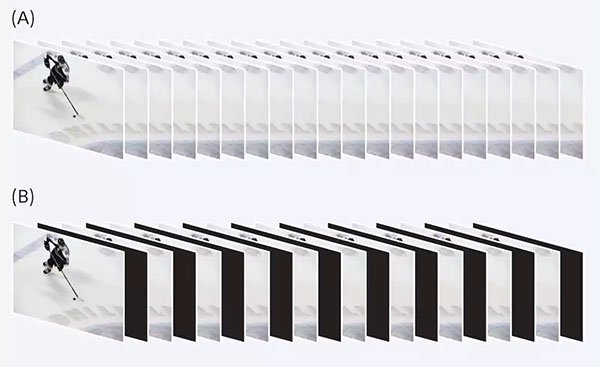
The phenomenal speed of sensor and processor on the a9, combined with the electronic shutter helps to eliminate blackouts that typical occur with mechanical shutters due to up-and-down mirror motion. This provides an uninterrupted live-view of your subject area (A) through the EVF and rear LCD screen, even during continuous shooting at 20fps.
You volition actually notice the benefits of no blackouts when shooting fast action, helping to make framing and tracking your subject so much easier.
The a7 III does provide a live-view display when shooting continuous up to 8fps, but you will become very cursory blackouts. When shooting at 10fps which is the maximum frames per second of the a7 3, there is no live-view in continuous shooting, instead the concluding image taken will exist displayed (B).
iv. Autofocus and AF Points
The stacked sensor in the a9 is able to calculate the correct focus and exposure settings up to 60 times per second, and not only while composing your shot only even when releasing the shutter. This is a huge reward when it comes to locking onto and tracking erratically moving subjects such equally birds in flight, it also improves the accuracy of Eye Autofocus. The a7 III calculates AF/AE settings at 20 times per second.
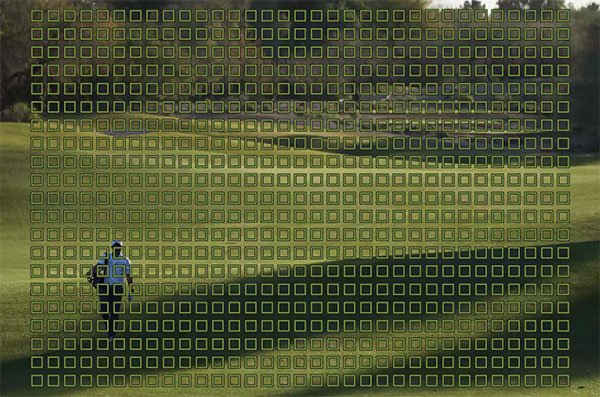
The autofocus organisation in the a7 Iii is derived from the one in the Sony a9, and both cameras feature 693 phase-detection AF points that embrace approximately 93% of image area. Both cameras also take 425 dissimilarity detection points.
5. Continuous Shooting and Buffer
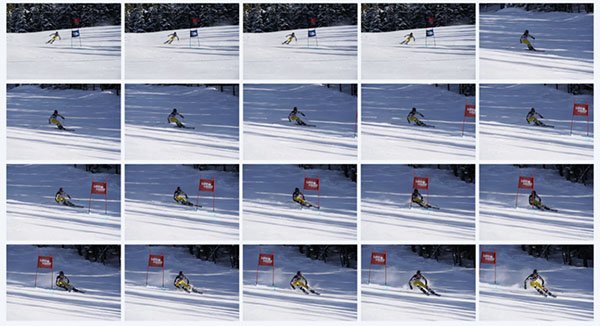
Thanks to its stacked sensor blueprint, the Sony a9 is able to shoot continuously for upward to 20fps when using the electronic shutter, however switch to the mechanical shutter and you lot are limited to 5fps. The a7 Iii can shoot upwards to 10fps with both electronic and the mechanical shutter.
When you are shooting at twenty frames per second it wouldn't unremarkably accept very long to fill the buffer of whatsoever other digital photographic camera, yet the a9 tin can record upwardly to a massive 368 JPEG and 245 compressed RAW files in a continuous burst. The buffer on the a7 Mark 3 supports up to approximately 177 JPEG images or 89 compressed RAW images in one continuous burst.
Occasionally I find the 20fps on the a9 to exist overkill, and it can be a nightmare sorting through all of the images at the end of the twenty-four hour period. Thankfully in that location is an selection to reduce the speed to either 10fps or 5fps if you lot practice desire to wearisome things down a little.
But at that place are times when I've taken total advantage of the 20fps, like capturing this moment simply before two Red Arrows crossed paths. Even with 20fps, with a endmost speed of effectually 760mph I was only able to capture two shots where both planes were visible in the frame, and only one made the cut. At 10fps I would require a little bit of adept luck to nail this exact moment.
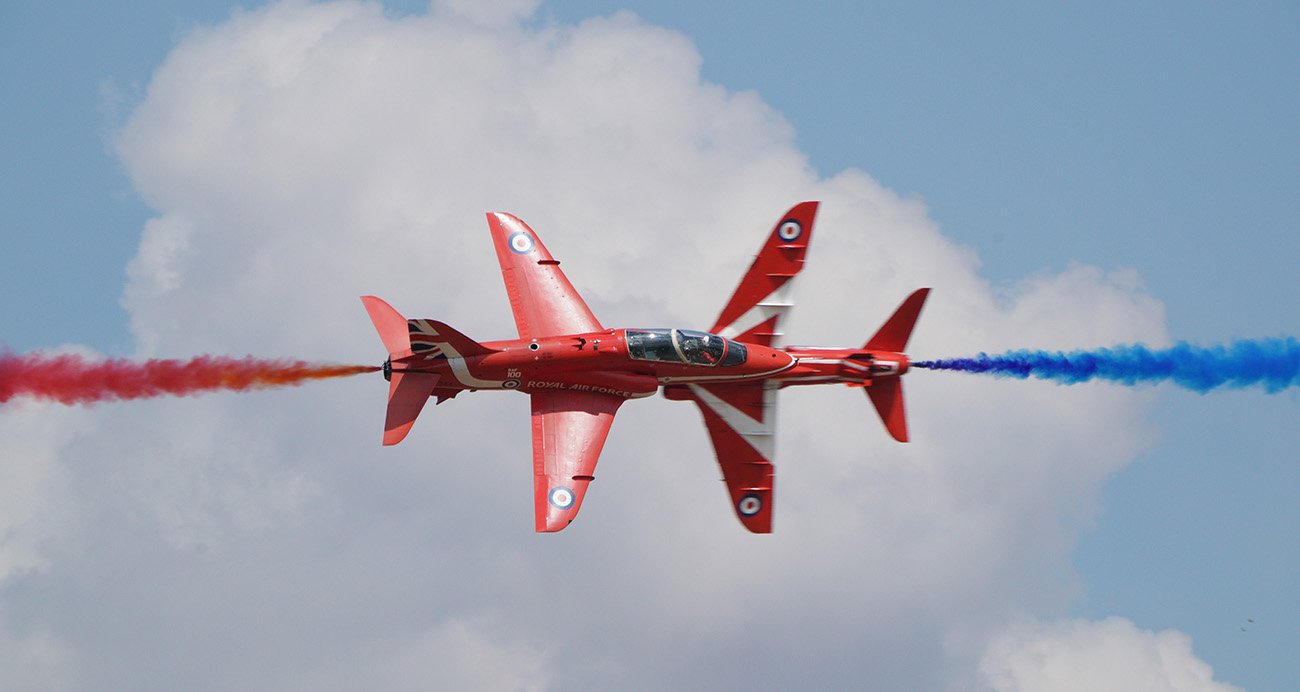
I was tracking the plane on the left thus panning to the right for this shot, hence the reason why the second plane has some motion blur. This was shot with the Sony FE 100-400mm GM lens plus 2x teleconverter, you can read my review of this lens here.
six. ISO Functioning and Dynamic Range
The ISO sensitivity range is the aforementioned betwixt the two cameras, with both having a 100-51200 native ISO range and an expanded range of 50-204800.
At that place is a slight variation in the maximum dynamic range, with the a7 Three scoring fourteen.7 and the a9 scoring 13.3 Evs past DXOMark. This difference is fairly small, and both cameras are still brilliant at recovering details from shadows / highlights when working with Raw files.
7. Viewfinder / LCD Screen
The Sony a7 Iii has a 2.36 million dot (1024 x 768) OLED electronic viewfinder with a refresh rate of 60fps. The a9 trumps this by having a 3.69 million dot OLED viewfinder which also has a faster refresh charge per unit of 100/120fps.
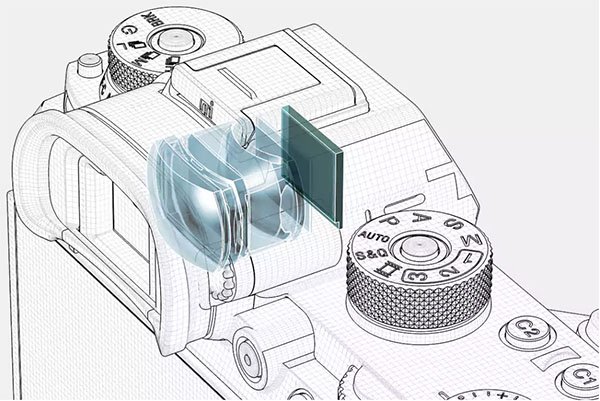
The rear LCD screens of both cameras feature touch controls for selecting and moving your focus betoken and zooming in. You tin can also tilt the screen upward and downwards. Still the a9 has a higher resolution LCD screen with 1,440k dots vs 921k dots found on the a7 Marking Iii.
The higher resolution of both the viewfinder and LCD screen of the a9 is quite helpful when using focus magnification, or the clear image zoom (digital zoom) part.
viii. Moving picture Profiles
Both the a7 III and the a9 tin can record 4K video at up to 30fps and 100Mbps using XAVC S compression. At 24p/25p there is zero sensor crop, which is achieved past capturing 6K so downsampling to 4k. At 30p recording is captured at roughly 5k, and so there is a slight crop of 1.2x crop but this helps to reduce rolling shutter.
Strangely nevertheless, Sony decided to omit picture profiles from the a9, including S-Log2 and 3, and ITU 709, all of which serve to maximize the dynamic range available for video recording. This characteristic is found in other models such as the a7R III, a7 Ii, a7S Two etc. and then it's odd to see that it has not been included in their flagship a9.
The a7 Three does support motion-picture show profiles including S-Log2, Due south-Log3, and HLG (Hybrid Log Gamma), allowing you to adjust colors and the vividness of the image during recording.
Here'southward a video from Sony to demonstrate the 4K HDR (HLG) capabilities of the a7 III:
And here'southward another video from Sony, but this time to demonstrate the 4K capabilities of the a9:
9. The Camera Body + Image Rating
The a7 III has a very similar torso to the a9, this includes the aforementioned touch screen, AF joystick, the dedicated AF-On button, dual SD Card slots (ane of which is UHS-II), a Protect/Charge per unit button, relocation of the picture show record push button to nigh the viewfinder, and the new and much larger NP-FZ100 bombardment.
However, they are not identical. The a9 features magnesium alloy for the front, side, and rear covers, whereas the a7 Iii is missing the magnesium alloy on the rear. The a7 III is as well missing the lock push button on the mode dial which the a9 does include.
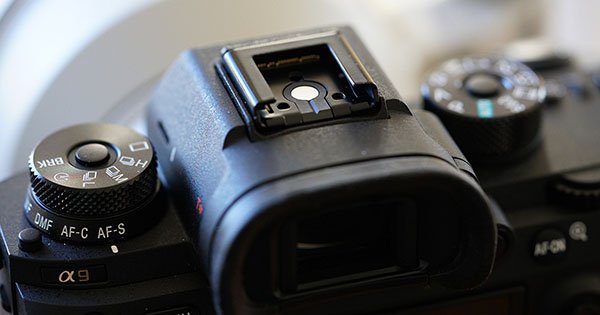
The a9 also gets an extra dial on the top left of the camera body. This way dial allows you lot to quickly select both your desired drive way (unmarried shot, continuous, timer, brk), and also the focus mode (AF-S, AF-C, DMF, MF). It'south actually a very useful addition that should be present on all of Sony's a7 series cameras.
The tactile feedback from the buttons on the a9 is better in my stance than the a7 Three. When you press buttons on the a9 yous tin feel and hear a dainty click to confirm your deportment, even so on the a7 3 this tactile feedback is a lot softer and you lot don't hear a click. Of course, this could actually be beneficial when shooting video and recording audio.
The a7 III weighs in at around 650g or i lb vii.0 oz (with battery and SD Card), making it 23 grams lighter than the a9.
Both cameras are dust and wet resistant, so they should both withstand a short pelting shower, merely they are not waterproof. The weak indicate seems to be the base of the photographic camera, so y'all'll want to avoid setting your camera downwardly in any puddles.
The a7 3 also includes an option to rate images from one to v stars, unfortunately this characteristic is not nowadays on the a9..
ten. Ethernet and Flash Sync Port
Yous'll also find that the Sony a9 has two extra connectors that are not present on the a7 Iii.
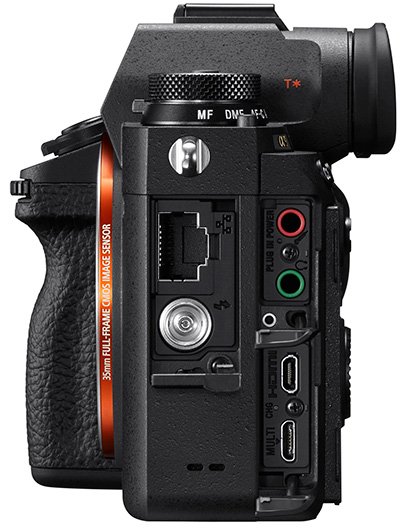
At that place'due south an extra flash sync port for studio flash units and other external lighting equipment, and besides an ethernet port that allows y'all to transfer images to an FTP server. Sony has an FPT Setup Guide for if you wish to do this, as it'south not the easiest of options to configure.
eleven. Battery Life and Charger
Both the a7 III and the a9 use the new NP-FZ100 battery which replaces the NP-FW50. The NP-FW50 was rated at a chapters of 1020mAh, whilst the new NP-FZ100 battery is rated at 2280mAh. This provides over double the capacity of the older battery.
Sony figures state that the a7 3 will allow y'all to take 710 shots (using LCD screen), and 650 shots with the a9. Information technology's possible that the higher resolution EVF and viewfinder in the a9 requires but a little more juice. However information technology's important to realize that in real life conditions you may really shoot many more than shots on a single accuse. I've shot well over chiliad images with my a9 before I've needed to alter the battery, although cold weather can as well reduce battery life a lot faster.
Both cameras tin exist charged via USB, and the a9 also includes the Sony BC-QZ1 Battery Charger. Unfortunately the Sony a7 Iii does not include the charger, leaving you with the but option of charging via USB. To charge the NP-FZ100 bombardment via USB takes approximately 5 hours, compared with 2.5 hours when using the BC-QZ1 Charger.
12. Cost
Besides the baking sensor and shutter speed of the a9, at that place is as well a blistering price difference betwixt the ii cameras. Currently the a7 Three costs $ane,998.00 (US Dollars) or £1999.99 for the trunk merely, and the a9 costs $4,498.00 (Usa Dollars) or £4299.00.
Decision
With the a9 costing more than double the price of the a7 III, the a7 Three is virtually probable going to be the first option for many photographers, and what a option it volition exist. Equally for just under $2000 you are getting a total-frame camera with great ISO functioning and dynamic range, 4k video recording with picture profiles, fast autofocus, dual SD Card slots, and a larger bombardment. If you shoot a lot of video then the picture profiles lone may be enough to swing the a7 3 in your favor.
However, the a9 is an incredible piece of technology. No other full-frame camera on the market today can offer 20 frames per second with no blackouts. With AF/AE settings calculated at 60x a 2d (3x faster than the a7III), if your job depends on you nailing incredibly fast activity shots, and your upkeep tin can stretch to it, the a9 is the camera that you volition want in your gear purse.
As I mentioned earlier, I'm fortunate to own both cameras and tin attest to the phenomenal speed of the a9. Information technology rarely misses focus, and when it does information technology's more than probable my own fault. The a7 III on the other manus still nails most shots, only every now and again you'll notice that a few are a little soft, which can be infuriating if it's a potential coin shot.
So have you already made your decision? If yous have, information technology would be great to hear which camera you decided to go for and why in the comments beneath.
And if you have decided on the a7 III, so yous might find my Sony a7 III Accessories Guide useful, all of which tin can also be used with the a9 due to them sharing a similar body design.
Source: https://www.alphashooters.com/compare/sony-a7iii-vs-a9/
Posted by: longgonly1982.blogspot.com
0 Response to "Sony Alpha 9 Vs 7 Iii"
Post a Comment